Skip to content

Fractional CTO for medical devices, from circuit board to clinical study.

I lead a contactless radar device for memory care end to end: the custom circuit board, embedded Linux, cloud, apps and the clinical study protocol now in University review. Available for outside work from December 2026.

Email me about your device →
one engineering lead
Board → clinicone engineering lead
publications and abstracts
9publications and abstracts
PI, Phase I under review
2 × NIH SBIRPI, Phase I under review
study protocol in University review
IRBstudy protocol in University review

One device assessment, with its eight questions marked

Example assessment

An at-home monitoring device, invented for illustration

  • Clinical needStrong
  • Technical feasibilityStrong
  • Regulatory pathWorkable
  • Clinical evidenceGap
  • Who paysGap
  • ManufacturingWorkable
  • IPWorkable
  • Team and capitalWorkable

Filled blocks: score out of 5. Gap: has to close before building.

Verdict: go, on two conditions.

Work with me.

Fractional CTO · medical devices and connected hardware

Built to the design controls FDA requires, with design history kept ready for ISO 13485 and ISO 14971.

Device assessment
A two-week review of a medical device project across clinical need, technical feasibility, regulatory path, clinical evidence, who pays, manufacturing, IP, and team and capital. You get a one-page assessment and a 90-day plan.
Fractional CTO
Hands-on technical leadership, part time: architecture, hiring and vendors, board and firmware reviews, and design history kept ready for ISO 13485 and ISO 14971.
Full build
Prototype to pilot. AI agents do much of the engineering, every revision is checked against datasheets and the schematic before anything is fabricated, and I review and sign off each release.

After the assessment: the 90-day plan

For the invented example above, which scored two gaps

  1. Days 1–30Test the riskiest assumption first, before more is spent.
  2. Days 31–60Close the two gaps: an evidence plan and a payer story.
  3. Days 61–90A build, raise or stop decision, with the numbers behind it.

Filled dot: the decision point.

Email me →

Email me with a line about your device and where it stands. bribradley@gmail.com

The record.

26 items, one tile each. Hover or tap to read.

Publications · 9

Hardware · 4

Software · 6

Clinical and funding · 7

PublicationsA Novel Framework for Synthesizing Biosensor Data and the Minimum Data Set to Improve Alzheimer’s Care. Alzheimer’s & Dementia, 2025.

Portfolio projects.

Portfolio

Checking AI agents' engineering before it is built

Verification system · 2026

AI agents now write a large share of the engineering on my sensing board. I built a system that checks every revision of the design before it goes to fabrication, and I test the checker itself by planting faults it has to find.

  • Caught boot-crystal load capacitors specified at 100 nF where about 27 pF was needed: the processor would never have booted.
  • Found a supply that oscillated above its absolute maximum in the chipmaker's own simulation model, and verified the fix.
  • Tested on deliberately hard faults, written separately and never seen before, it caught 56 to 80 percent across eight blind sets.
Film, 1:05. Music: Brian Bradley.

Digital biomarkers of cognitive and physical decline

Research · 2023 to now

The measurements that predict cognitive decline, gait speed most of all, are usually taken in a clinic once or twice a year. My research turns everyday movement, sleep and breathing, measured in the room with nothing worn, into markers that can be tracked every day against each person's own usual range.

  • Movement-complexity analysis from ambient sensors, applied to predicting mild cognitive impairment and identifying sundowning (Alzheimer's & Dementia, 2024).
  • A framework that joins continuous sensor data with the Minimum Data Set that nursing homes already report (Alzheimer's & Dementia, 2025).
  • Contactless pulse and respiration compared against clinical reference measurements (ASME Design of Medical Devices, 2025).
  • A defined family of eight movement, sleep and vital-sign measures; none is yet validated against ground truth, and the memory care study is built to test them.
  • Principal Investigator on an NIH SBIR Phase I application to the National Institute on Aging for contactless gait and mobility biomarkers, under review.

Caregiver app, nurse station and cloud, shipped together

iPhone, iPad, Apple Watch, web, AWS · 2026

The software side of the memory care system: real-time alerts on the caregiver's phone, a nurse station in the browser, and the cloud behind both.

  • 284 pull requests merged across the three codebases between 26 September and 3 November 2026.
  • Web, mobile app and cloud released together on 2 November 2026.
  • An alert pushed to a phone opens straight to its detail screen, and the outcome is recorded back to the cloud, verified end to end on 6 November 2026.
  • A nightly summary table cut a 57-day history query from 10 to 12 seconds to under 5, with identical results.

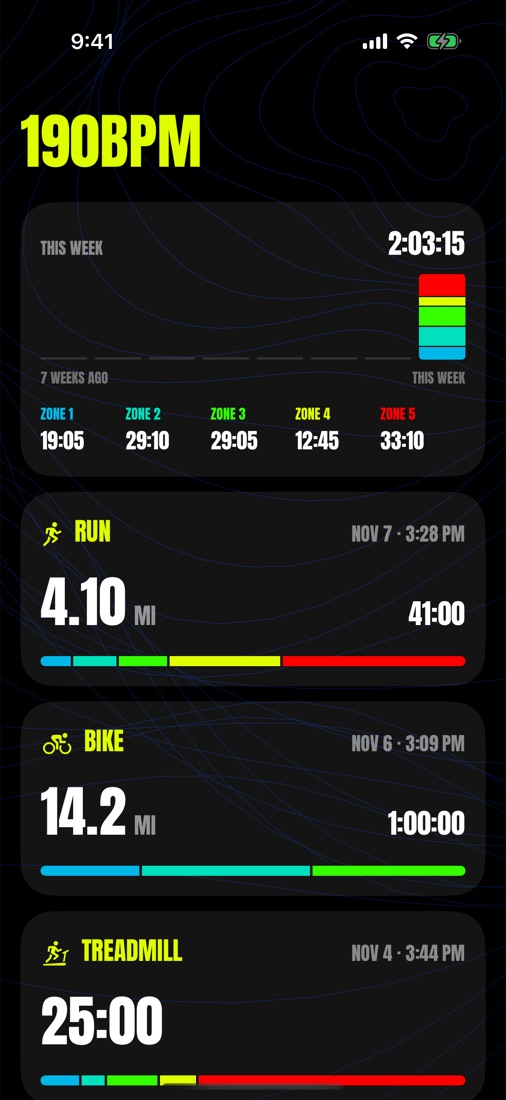
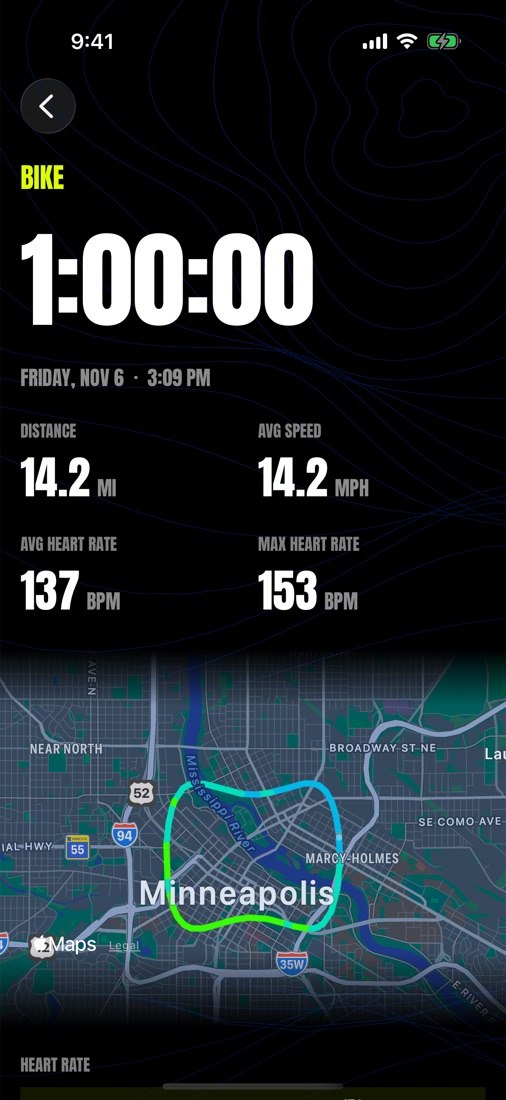
190BPM, a heart-rate zone app for Apple Watch

Apple Watch and iPhone · private beta

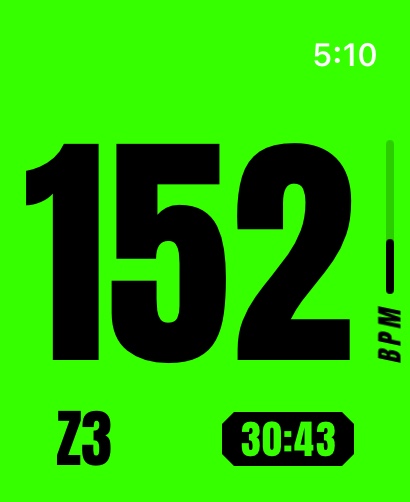
A native SwiftUI watch app that runs without the phone, with an iPhone companion. The whole screen turns the current zone's color so it reads at a glance mid-effort, and workouts save to Apple Health with their routes.

  • Zones by the heart-rate-reserve method Apple Fitness uses, with optional haptics: two taps for a zone up, one for a zone down.
  • Glove Lock: on bike and snow workouts the watch's Water Lock keeps gloved hands from pressing the crown by accident.
  • Iterated build by build from real rides and walks; dozens of TestFlight builds shipped.
Apple Watch screen showing 152 BPM on a full-screen zone 3 color with a zone gaugeiPhone screen showing this week's time in each heart-rate zone and recent workoutsiPhone ride detail with time, distance, speed, heart rate and a zone-colored route map
Simulator data.

What I have built.

Selected systems

Five systems, each a layer of the same instrument: the sensing hardware, the software that runs on it, the platform that receives it, the screens care staff use, and the facility it is installed in.

01

Radar sensing board

Hardware designEVT-0.3

Invent

Evaluation radar kits are built for a lab bench. A sensor that lives on a resident’s wall for months has to stay cool, quiet and dark, survive its own faults, and ask nothing of anyone in the room. No evaluation kit is designed for that, so the sensor had to be built.

Build

An 8-layer board built around TI’s IWR6843AOP 60 GHz antenna-on-package radar and an Octavo OSD6254 system-in-package host (TI AM6254). I did the power tree and reset design, and brought the radar up on TI evaluation hardware first.

Deploy

EVT-0.3 is the third design revision and the first to be built, at EI Microcircuits in Mankato, Minnesota. Each revision is checked against the datasheets and the schematic before release, and the architecture ran on TI evaluation boards before the first layout.

Radar
TI IWR6843AOP, 60 GHz FMCW
Host
Octavo OSD6254 SiP (TI AM6254)
Stack-up
8-layer, controlled impedance
Enclosure
Wall-mounted, no status light
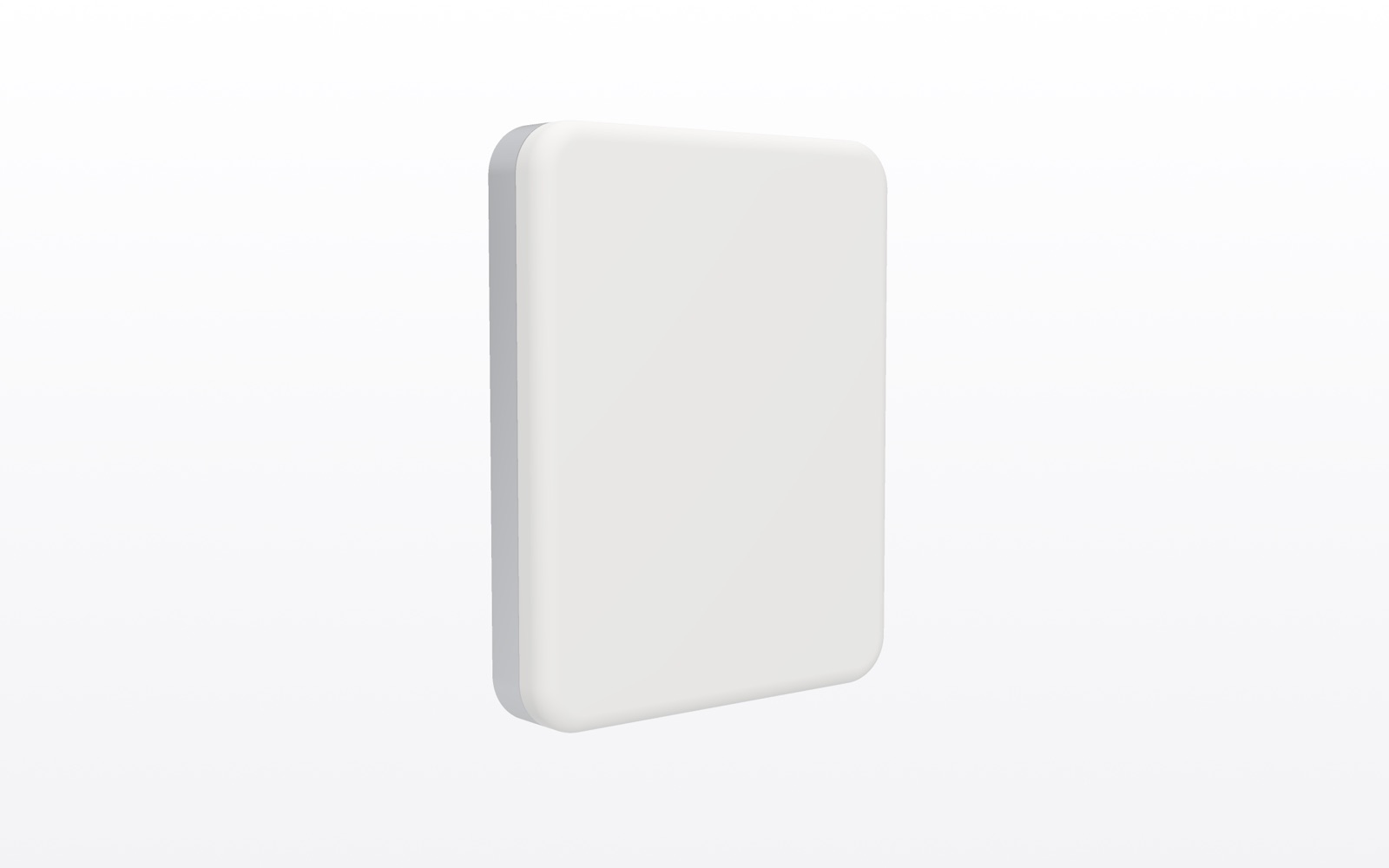
Rendered white rounded-rectangle enclosure, three-quarter view on a light gray ground.
Fig. 2Enclosure, EVT-0.3 design render. A closed white case on the wall: nothing worn, nothing to press, no light.
02

Embedded acquisition and edge inference

Firmware and signal processing24 h bench soak

Invent

Fall detection that phones home to a server introduces latency and a dependency on the building’s network at the exact moment neither can be trusted. The decision has to happen on the device.

Build

Yocto-built embedded Linux on TI AM62x, with U-Boot and the device tree for the board. A UART parser decodes the radar’s TLV stream into point clouds and tracks for on-device classification of falls and long-lie events. Radar firmware is flashed from the host through TI’s ROM bootloader, with no external programmer.

Deploy

A 24.1-hour continuous bench soak recorded 2,283,608 frames at 99.998 percent sequence continuity. Rewriting the on-device Parquet writer cut tracking files 47.5-fold with no data lost, which is what puts a device-day at 74 MB. Recorded radar streams replay through the real device software over a virtual serial port, so a fall can be tested end to end, into the cloud database, with no hardware attached.

OS
Yocto Linux, TI AM62x
Soak
2,283,608 frames in 24.1 h
Continuity
99.998 %, four gaps
Volume
74 MB per device-day
03

Clinical data platform

Cloud architectureDeployed, before study start

Invent

Continuous radar from occupied rooms is protected health information the moment it can be linked to a person. The pipeline has to be de-identified at the edge, not cleaned up downstream.

Build

A Terraform landing zone under eighteen CDK application stacks on AWS. Devices write Parquet on board and upload it straight to S3; fall alerts take their own path over MQTT to AWS IoT Core. Athena queries the lake, a FastAPI layer fronts the API, and a narrative service on Amazon Bedrock writes plain-language summaries for care staff, so resident data never leaves AWS.

Deploy

Runs on AWS under a Business Associate Addendum. Resident identity never enters the pipeline; records are coded and re-identifiable only inside the facility. Every fall alert escalates until a person acknowledges it, a synthetic alert tests the whole path every fifteen minutes, and every read of research data is logged.

IaC
Terraform landing zone, 18 CDK stacks
Ingest
Device Parquet → S3; alerts via IoT Core
Alerts
Escalate until acknowledged
Audit
Every research-data read logged

In the room

The device

Decides on board. Nothing worn, nothing to press.

In transit

Coded records

De-identified at the edge. No names leave the building.

In the cloud

The platform

Every read of research data is logged.

On the floor

Care staff

Nurse station and phone, one shared set of rules.

Fall alertThe deviceits own pathescalates until a person acknowledgescare staff

A synthetic alert runs this whole path every fifteen minutes, so a broken link is found by the system, not by a resident.

Fig. 3System at a glance. The device decides in the room; only coded records travel; a fall alert has its own path and does not stop until a person answers it.
04

Caregiver app and nurse station

Clinical softwareIn testing

Invent

A nurse on a memory care floor has seconds per resident and no time for a dashboard. What the system knows has to arrive as one clear call to act, and anything the study protocol does not allow should not be on the screen at all.

Build

A native iPhone and iPad app and a web nurse station, built on one shared rules library, so every figure a nurse sees is computed once and the phone and the station can never disagree. Views are scoped by role (nurse, administrator, clinician, engineer) to what the protocol permits; nurse screens show no vital signs.

Deploy

In testers’ hands with over-the-air updates ahead of the study. Trends compare each resident with their own usual range rather than a population norm.

Platforms
iPhone, iPad, web nurse station
Logic
One shared rules library
Access
Role-scoped to the protocol
Updates
Over the air
Daily active minutesTheir own usual rangeA sustained week below it
Fig. 4Illustration, synthetic data. Daily active minutes for one made-up resident against their own usual range (the middle half of the previous fourteen days). A quarter of ordinary days fall below that range by definition; what matters is a run of them, measured against this person rather than people in general.
05

Memory care deployment

Clinical systems integrationIn University review

Invent

Every measurement in the literature that predicts cognitive decline, gait speed most of all, is taken in a clinic on the day of the appointment. The signal that matters is what the person does the other 364 days, and it cannot cost them a wearable they will take off or a camera they would refuse.

Build

Three sensing nodes per resident room, split by what each room has to answer: presence and vitals at the bed and bath, presence and movement quality in the living space. Installation and setup happen on site.

Deploy

A study protocol at a Minneapolis memory care facility, scoped to ten resident rooms and thirty devices, is in review with the University's IRB, Health Information Privacy and Compliance Office, and vendor risk assessment. Deployment starts on approval.

Site
Memory care facility, Minneapolis
Review
IRB, privacy office and vendor risk, pending
Scope
10 resident rooms, 30 devices
Per room
3 nodes: bed, bath, living space
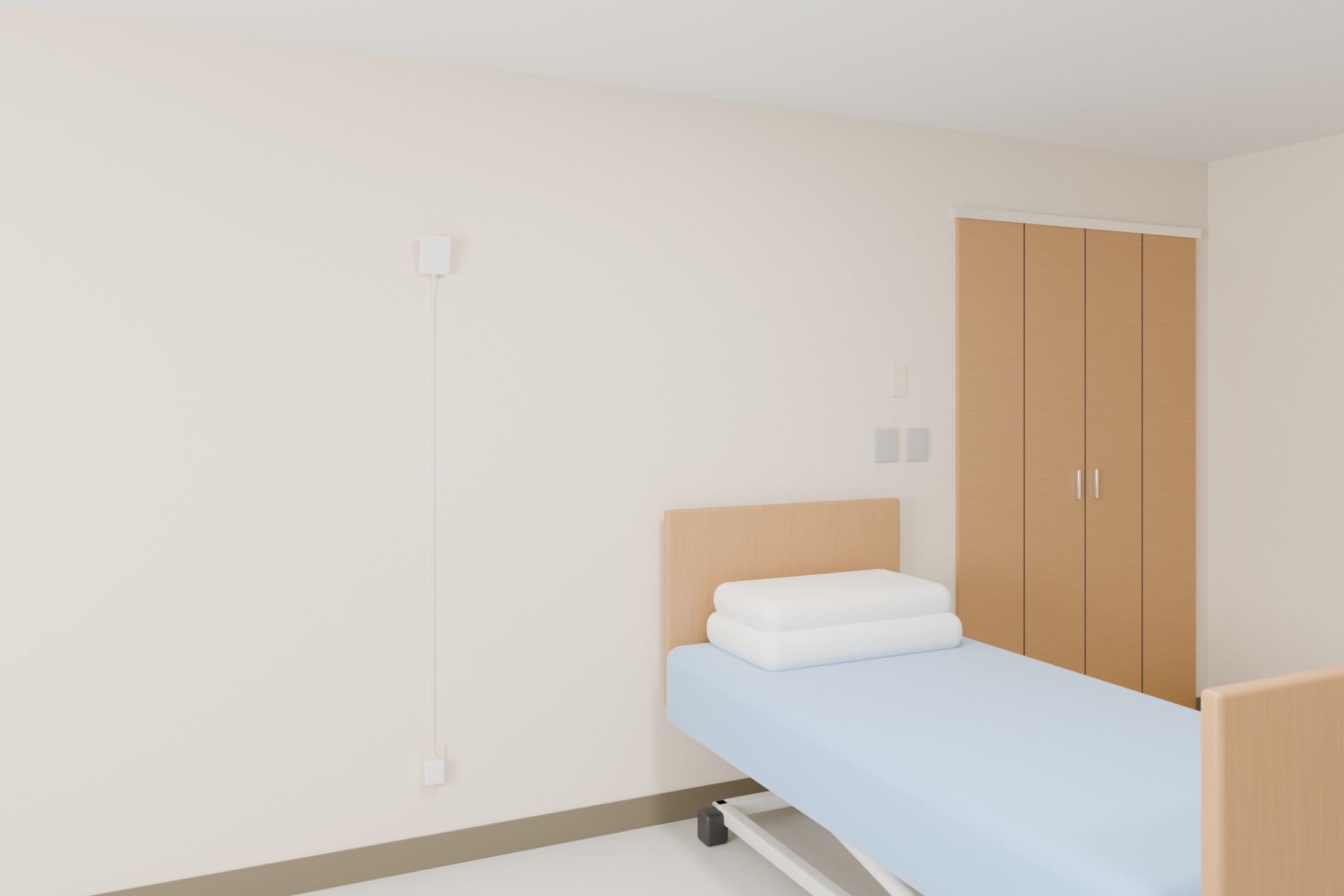
Rendered care-home bedroom: a small white device high on the wall beside a hospital bed, with a thin cable down to an outlet.
Fig. 5A resident room, rendered. The device sits on the wall above the bed and is powered from a low outlet. Nothing is worn and nothing faces the resident.